Buy timber-wolf.eu ?
We are moving the project
timber-wolf.eu .
Are you interested in purchasing the domain
timber-wolf.eu ?
domain@kv-gmbh.de · 0541-91531010
Buy timber-wolf.eu ?
What is the difference between allosteric inhibition and allosteric activation?
Allosteric inhibition occurs when a molecule binds to an allosteric site on an enzyme, causing a conformational change that decreases the enzyme's activity. In contrast, allosteric activation involves a molecule binding to an allosteric site on an enzyme, leading to a conformational change that increases the enzyme's activity. Essentially, allosteric inhibition decreases enzyme activity, while allosteric activation increases enzyme activity. **
Is allosteric inhibition irreversible?
Allosteric inhibition is typically reversible, meaning that the inhibitor can bind to the allosteric site and block the activity of the enzyme, but can also dissociate from the site, allowing the enzyme to regain its activity. This is in contrast to irreversible inhibition, where the inhibitor forms a covalent bond with the enzyme, permanently inactivating it. **


Similar search terms for Allosteric
Top-Angebote
Products related to Allosteric:
-
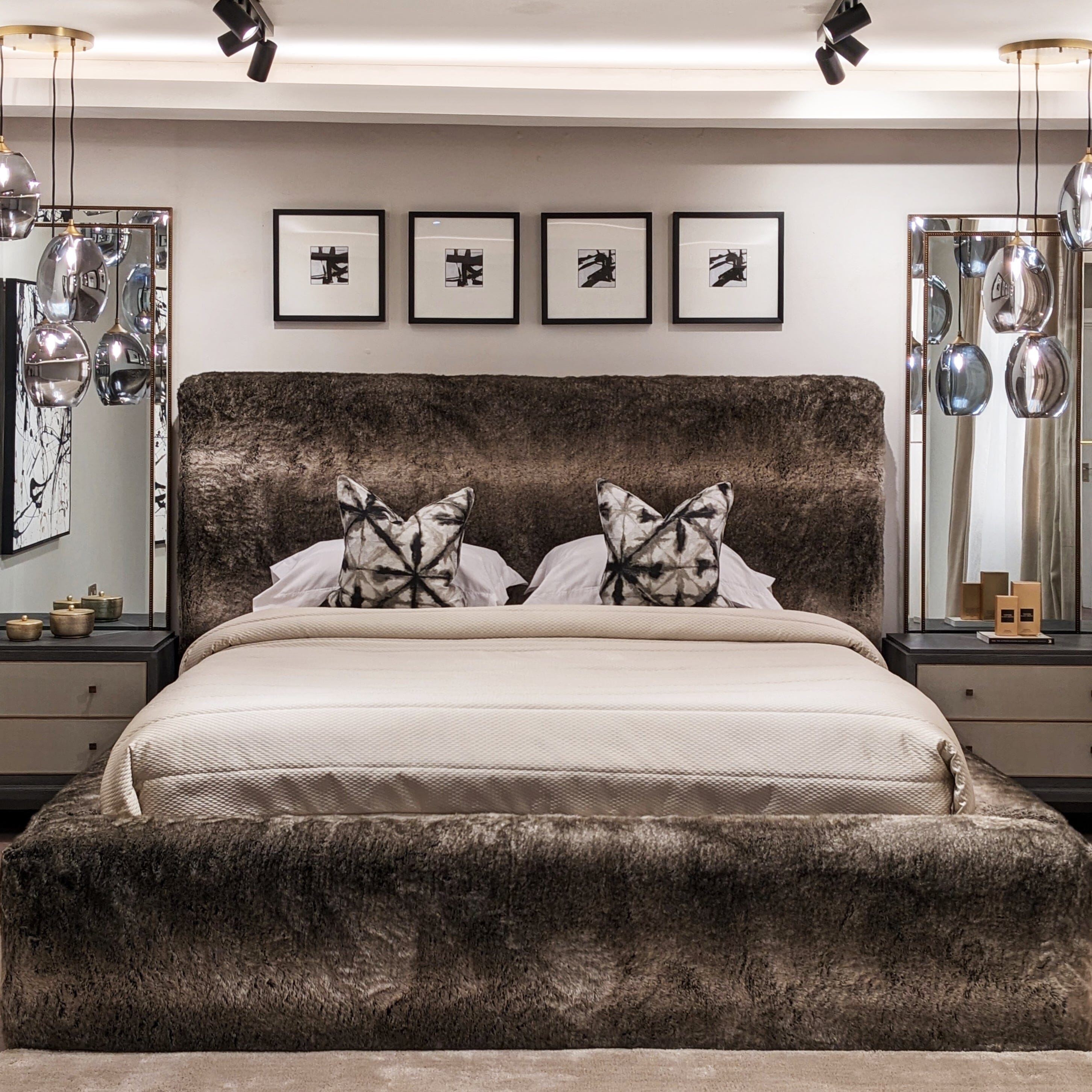
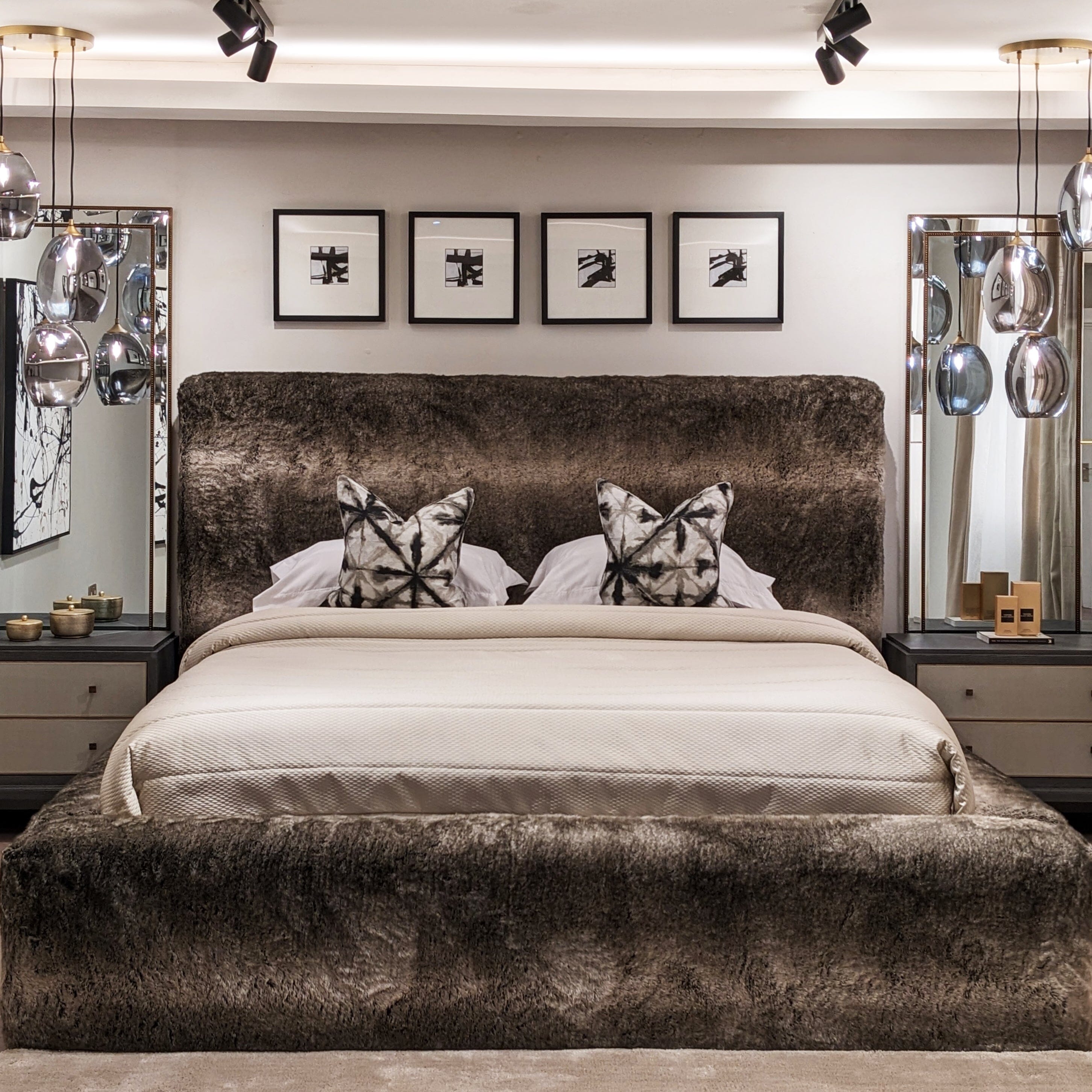
Arctic Wolf Luxury Chunky Faux Fur Bed, KingOrder your fabric sample here. Turn your bedroom into a cosy haven with our luxurious Arctic Luxury Chunky Faux Fur Bed. This show-stopping piece will add a statement to your space, upholstered with luxurious, softer-than-soft faux fur, this bedstead is both warm and sumptuous for a beautiful, serene vibe. Imagine sinking into this opulent bedstead, perfect for styling with bronze and black accents. This elegant piece features a deep grey shade, with a luxurious long-pile that will look stunning when styled with our Cafe Au Lait collection. This product is made to order and will take approximately 10-12 weeks to arrive. Made from 100% fire treated polyacrylic faux fur. Dimensions: Double:W1780 x L2310mm King: W1930 x L2390mm Super king: W2240 x L2390mm Emperor: W2770 x L2730mm Height: 1400mm Base Height: 460mm Expertly made to order in the UK.2099,00 £*Shipping: 4,99 £Secure redirect to the provider
-
Arctic Wolf Luxury Chunky Faux Fur Bed, EmperorOrder your fabric sample here. Turn your bedroom into a cosy haven with our luxurious Arctic Luxury Chunky Faux Fur Bed. This show-stopping piece will add a statement to your space, upholstered with luxurious, softer-than-soft faux fur, this bedstead is both warm and sumptuous for a beautiful, serene vibe. Imagine sinking into this opulent bedstead, perfect for styling with bronze and black accents. This elegant piece features a deep grey shade, with a luxurious long-pile that will look stunning when styled with our Cafe Au Lait collection. This product is made to order and will take approximately 10-12 weeks to arrive. Made from 100% fire treated polyacrylic faux fur. Dimensions: Double:W1780 x L2310mm King: W1930 x L2390mm Super king: W2240 x L2390mm Emperor: W2770 x L2730mm Height: 1400mm Base Height: 460mm Expertly made to order in the UK.3099,00 £*Shipping: 4,99 £Secure redirect to the provider


-
What is allosteric inhibition?
Allosteric inhibition is a type of enzyme regulation where a molecule binds to a site on the enzyme that is different from the active site, causing a conformational change in the enzyme's structure. This change reduces the enzyme's activity and ability to bind to its substrate, ultimately inhibiting its function. Allosteric inhibition is a reversible process and can be used to regulate enzyme activity in response to changing cellular conditions. **
-
Does Vmax change in allosteric inhibition?
Yes, Vmax can change in allosteric inhibition. Allosteric inhibition occurs when a molecule binds to an enzyme at a site other than the active site, causing a conformational change that reduces the enzyme's activity. This can result in a decrease in the enzyme's maximum velocity (Vmax) as the enzyme becomes less efficient at catalyzing the reaction. Therefore, allosteric inhibition can lead to a decrease in Vmax, ultimately affecting the rate of the enzymatic reaction. **
-
What is a cofactor allosteric activator?
A cofactor allosteric activator is a molecule that binds to an enzyme at a site other than the active site, causing a conformational change in the enzyme that increases its activity. This type of activator works by promoting the enzyme's ability to bind to its substrate and carry out its catalytic function. Cofactor allosteric activators are important for regulating enzyme activity in response to changes in the cell's environment, allowing for fine-tuning of metabolic pathways and other cellular processes. **
-
Is end product repression automatically an allosteric inhibition?
End product repression is not automatically an allosteric inhibition. While end product repression often involves the inhibition of an enzyme by the end product of a metabolic pathway, this inhibition can occur through various mechanisms. Allosteric inhibition is one possible mechanism, where the end product binds to a site on the enzyme other than the active site, leading to a conformational change that inhibits the enzyme's activity. However, end product repression can also occur through competitive inhibition, non-competitive inhibition, or other regulatory mechanisms that do not involve allosteric binding. **

Is an end-product repression automatically an allosteric inhibition?
No, an end-product repression is not automatically an allosteric inhibition. End-product repression refers to the regulation of enzyme activity by the final product of a metabolic pathway, typically through feedback inhibition. This can occur through various mechanisms, including competitive inhibition or non-competitive inhibition, in addition to allosteric inhibition. Allosteric inhibition specifically involves the binding of a molecule at a site other than the active site, leading to a conformational change that affects enzyme activity. **
Is allosteric inhibition the same as non-competitive inhibition?
Allosteric inhibition and non-competitive inhibition are not the same, although they are related. Non-competitive inhibition refers to the binding of an inhibitor to a site on the enzyme that is not the active site, thereby preventing the substrate from binding to the active site. Allosteric inhibition, on the other hand, occurs when an inhibitor binds to a site on the enzyme that is distinct from the active site, causing a conformational change in the enzyme that reduces its activity. While both types of inhibition involve the binding of an inhibitor to a site other than the active site, allosteric inhibition specifically involves a change in the enzyme's shape and activity. **
Top-Angebote
Products related to Allosteric:
-
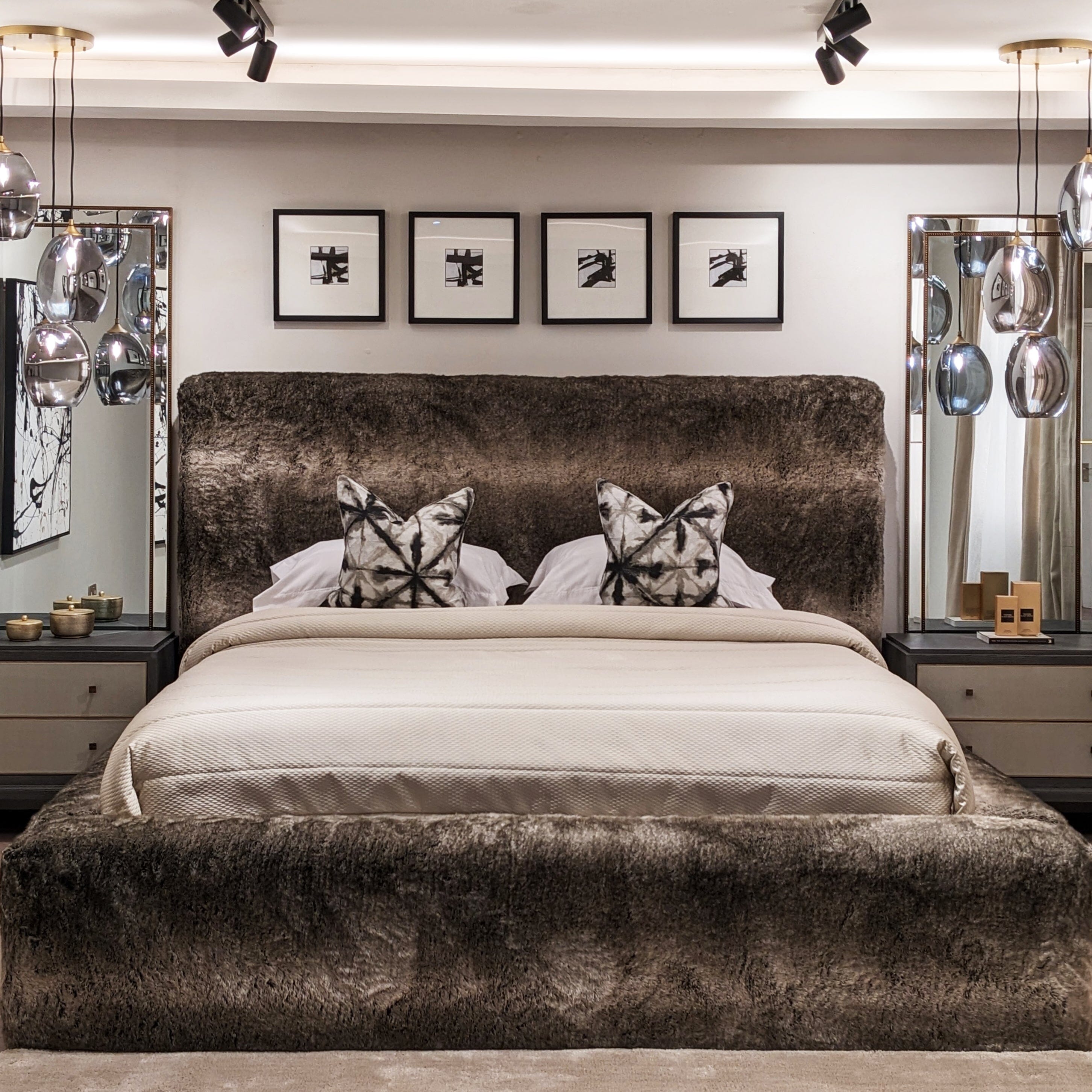
Arctic Wolf Luxury Chunky Faux Fur Bed, DoubleOrder your fabric sample here. Turn your bedroom into a cosy haven with our luxurious Arctic Luxury Chunky Faux Fur Bed. This show-stopping piece will add a statement to your space, upholstered with luxurious, softer-than-soft faux fur, this bedstead is both warm and sumptuous for a beautiful, serene vibe. Imagine sinking into this opulent bedstead, perfect for styling with bronze and black accents. This elegant piece features a deep grey shade, with a luxurious long-pile that will look stunning when styled with our Cafe Au Lait collection. This product is made to order and will take approximately 10-12 weeks to arrive. Made from 100% fire treated polyacrylic faux fur. Dimensions: Double:W1780 x L2310mm King: W1930 x L2390mm Super king: W2240 x L2390mm Emperor: W2770 x L2730mm Height: 1400mm Base Height: 460mm Expertly made to order in the UK.1799,00 £*Shipping: 4,99 £Secure redirect to the provider
-
What is the difference between allosteric inhibition and allosteric activation?
Allosteric inhibition occurs when a molecule binds to an allosteric site on an enzyme, causing a conformational change that decreases the enzyme's activity. In contrast, allosteric activation involves a molecule binding to an allosteric site on an enzyme, leading to a conformational change that increases the enzyme's activity. Essentially, allosteric inhibition decreases enzyme activity, while allosteric activation increases enzyme activity. **
-
Is allosteric inhibition irreversible?
Allosteric inhibition is typically reversible, meaning that the inhibitor can bind to the allosteric site and block the activity of the enzyme, but can also dissociate from the site, allowing the enzyme to regain its activity. This is in contrast to irreversible inhibition, where the inhibitor forms a covalent bond with the enzyme, permanently inactivating it. **
-
What is allosteric inhibition?
Allosteric inhibition is a type of enzyme regulation where a molecule binds to a site on the enzyme that is different from the active site, causing a conformational change in the enzyme's structure. This change reduces the enzyme's activity and ability to bind to its substrate, ultimately inhibiting its function. Allosteric inhibition is a reversible process and can be used to regulate enzyme activity in response to changing cellular conditions. **
-
Does Vmax change in allosteric inhibition?
Yes, Vmax can change in allosteric inhibition. Allosteric inhibition occurs when a molecule binds to an enzyme at a site other than the active site, causing a conformational change that reduces the enzyme's activity. This can result in a decrease in the enzyme's maximum velocity (Vmax) as the enzyme becomes less efficient at catalyzing the reaction. Therefore, allosteric inhibition can lead to a decrease in Vmax, ultimately affecting the rate of the enzymatic reaction. **
Similar search terms for Allosteric
-
Arctic Wolf Luxury Chunky Faux Fur Bed, KingOrder your fabric sample here. Turn your bedroom into a cosy haven with our luxurious Arctic Luxury Chunky Faux Fur Bed. This show-stopping piece will add a statement to your space, upholstered with luxurious, softer-than-soft faux fur, this bedstead is both warm and sumptuous for a beautiful, serene vibe. Imagine sinking into this opulent bedstead, perfect for styling with bronze and black accents. This elegant piece features a deep grey shade, with a luxurious long-pile that will look stunning when styled with our Cafe Au Lait collection. This product is made to order and will take approximately 10-12 weeks to arrive. Made from 100% fire treated polyacrylic faux fur. Dimensions: Double:W1780 x L2310mm King: W1930 x L2390mm Super king: W2240 x L2390mm Emperor: W2770 x L2730mm Height: 1400mm Base Height: 460mm Expertly made to order in the UK.2099,00 £*Shipping: 4,99 £Secure redirect to the provider
-
Arctic Wolf Luxury Chunky Faux Fur Bed, EmperorOrder your fabric sample here. Turn your bedroom into a cosy haven with our luxurious Arctic Luxury Chunky Faux Fur Bed. This show-stopping piece will add a statement to your space, upholstered with luxurious, softer-than-soft faux fur, this bedstead is both warm and sumptuous for a beautiful, serene vibe. Imagine sinking into this opulent bedstead, perfect for styling with bronze and black accents. This elegant piece features a deep grey shade, with a luxurious long-pile that will look stunning when styled with our Cafe Au Lait collection. This product is made to order and will take approximately 10-12 weeks to arrive. Made from 100% fire treated polyacrylic faux fur. Dimensions: Double:W1780 x L2310mm King: W1930 x L2390mm Super king: W2240 x L2390mm Emperor: W2770 x L2730mm Height: 1400mm Base Height: 460mm Expertly made to order in the UK.3099,00 £*Shipping: 4,99 £Secure redirect to the provider
-
Arctic Wolf Luxury Chunky Faux Fur Bed, Super KingOrder your fabric sample here. Turn your bedroom into a cosy haven with our luxurious Arctic Luxury Chunky Faux Fur Bed. This show-stopping piece will add a statement to your space, upholstered with luxurious, softer-than-soft faux fur, this bedstead is both warm and sumptuous for a beautiful, serene vibe. Imagine sinking into this opulent bedstead, perfect for styling with bronze and black accents. This elegant piece features a deep grey shade, with a luxurious long-pile that will look stunning when styled with our Cafe Au Lait collection. This product is made to order and will take approximately 10-12 weeks to arrive. Made from 100% fire treated polyacrylic faux fur. Dimensions: Double:W1780 x L2310mm King: W1930 x L2390mm Super king: W2240 x L2390mm Emperor: W2770 x L2730mm Height: 1400mm Base Height: 460mm Expertly made to order in the UK.2499,00 £*Shipping: 4,99 £Secure redirect to the provider
-
What is a cofactor allosteric activator?
A cofactor allosteric activator is a molecule that binds to an enzyme at a site other than the active site, causing a conformational change in the enzyme that increases its activity. This type of activator works by promoting the enzyme's ability to bind to its substrate and carry out its catalytic function. Cofactor allosteric activators are important for regulating enzyme activity in response to changes in the cell's environment, allowing for fine-tuning of metabolic pathways and other cellular processes. **
-
Is end product repression automatically an allosteric inhibition?
End product repression is not automatically an allosteric inhibition. While end product repression often involves the inhibition of an enzyme by the end product of a metabolic pathway, this inhibition can occur through various mechanisms. Allosteric inhibition is one possible mechanism, where the end product binds to a site on the enzyme other than the active site, leading to a conformational change that inhibits the enzyme's activity. However, end product repression can also occur through competitive inhibition, non-competitive inhibition, or other regulatory mechanisms that do not involve allosteric binding. **
-
Is an end-product repression automatically an allosteric inhibition?
No, an end-product repression is not automatically an allosteric inhibition. End-product repression refers to the regulation of enzyme activity by the final product of a metabolic pathway, typically through feedback inhibition. This can occur through various mechanisms, including competitive inhibition or non-competitive inhibition, in addition to allosteric inhibition. Allosteric inhibition specifically involves the binding of a molecule at a site other than the active site, leading to a conformational change that affects enzyme activity. **
-
Is allosteric inhibition the same as non-competitive inhibition?
Allosteric inhibition and non-competitive inhibition are not the same, although they are related. Non-competitive inhibition refers to the binding of an inhibitor to a site on the enzyme that is not the active site, thereby preventing the substrate from binding to the active site. Allosteric inhibition, on the other hand, occurs when an inhibitor binds to a site on the enzyme that is distinct from the active site, causing a conformational change in the enzyme that reduces its activity. While both types of inhibition involve the binding of an inhibitor to a site other than the active site, allosteric inhibition specifically involves a change in the enzyme's shape and activity. **
* All prices are inclusive of VAT and, if applicable, plus shipping costs. The offer information is based on the details provided by the respective shop and is updated through automated processes. Real-time updates do not occur, so deviations can occur in individual cases. ** Note: Parts of this content were created by AI.