Buy timber-wolf.eu ?
We are moving the project
timber-wolf.eu .
Are you interested in purchasing the domain
timber-wolf.eu ?
domain@kv-gmbh.de · 0541-91531010
Buy timber-wolf.eu ?
Is taxonomy the same as systematics?
Taxonomy and systematics are related fields within biology, but they are not the same. Taxonomy is the science of naming, defining, and classifying organisms into different categories based on their similarities and differences. Systematics, on the other hand, is the study of the evolutionary relationships between different organisms, including their classification and the reconstruction of their evolutionary history. While taxonomy focuses on the naming and categorization of organisms, systematics delves deeper into understanding the evolutionary relationships and patterns among different species. **
Can one create family trees and cladograms using taxonomy?
Yes, one can create family trees and cladograms using taxonomy. Taxonomy is the science of classifying organisms into different categories based on their characteristics and evolutionary relationships. By organizing organisms into groups based on their similarities and differences, taxonomists can create family trees that show the evolutionary history and relationships between different species. Cladograms, which are branching diagrams that show these relationships, can also be constructed using taxonomic data to visually represent the evolutionary history of a group of organisms. **


Similar search terms for Taxonomy
Top-Angebote
Products related to Taxonomy:
-
Skip's Garage Nevada Wolf Pack Cornhole Board Set"These boards are Regulation Sized 2x4 (24"" Wide x 48"" Long). They are built with Premium Wood 1x4 Frames and Solid Wood 2x3's for the legs. Both boards feature a 1/2"" Sanded Birch Plywood Surface for perfect playability."306,49 $*Shipping: 0,00 $Secure redirect to the provider
-
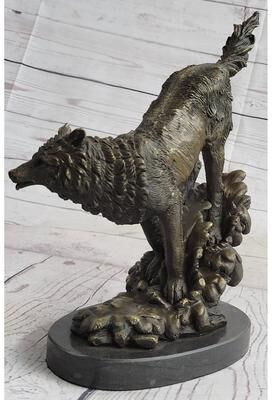
Bronzhaus Running Imitative Wolf Bronze Metal Statue Sculpture Wildlife Decor On Marble Base 9.5 Inches X 10 InchesCondition: This sculpture is in perfect condition Bronze Dimensions with Marble Base: Height 9.5 inches X Width 10 inches Marble Dimensions: Diameter 6 inches Height without base:8.5 inches Weight:8 LBS Inventory:78YDW1085687 Original or Reproduction:…295,49 $*Shipping: 0,00 $Secure redirect to the provider


-
Can one create phylogenetic trees and cladograms using taxonomy?
Yes, one can create phylogenetic trees and cladograms using taxonomy. Taxonomy, the science of classifying organisms based on shared characteristics, forms the basis for constructing phylogenetic trees and cladograms. By organizing organisms into groups based on their evolutionary relationships, taxonomic classifications can be used to create visual representations of these relationships in the form of phylogenetic trees and cladograms. These tools help researchers understand the evolutionary history and relatedness of different species. **
-
What is the difference between taxonomy and nomenclature in systematics?
Taxonomy is the science of classifying and naming organisms based on their characteristics and evolutionary relationships. It involves identifying, describing, and naming species, as well as organizing them into hierarchical categories like genus and family. Nomenclature, on the other hand, is the system of rules and conventions for naming organisms. It includes the specific rules for assigning scientific names to organisms, ensuring that each species has a unique and universally recognized name. In summary, taxonomy is the science of classification, while nomenclature is the system of naming within that classification system. **
-
Why does the WordPress custom taxonomy not appear in the Gutenberg editor?
The WordPress custom taxonomy does not appear in the Gutenberg editor by default because the Gutenberg editor is designed to primarily handle content creation and editing, while taxonomies are more related to organizing and categorizing content. However, developers can enable the display of custom taxonomies in the Gutenberg editor by using custom code or plugins to integrate the taxonomies into the editor interface. This allows users to easily assign and manage taxonomy terms for their content within the Gutenberg editor. **
-
'Forest or wildlife?'
Both forests and wildlife are important components of our ecosystem. Forests provide habitats for a wide variety of wildlife species, while wildlife plays a crucial role in maintaining the balance of the ecosystem. It is essential to protect both forests and wildlife to ensure the health and sustainability of our planet. Conservation efforts should focus on preserving both forests and wildlife to maintain biodiversity and promote a healthy environment for future generations. **


When does the wolf howl?
Wolves typically howl to communicate with other pack members, establish territory boundaries, or to locate each other. They are known to howl more frequently during the evening and early morning hours, as this is when they are most active. Additionally, wolves may howl in response to certain sounds, such as sirens or other loud noises, which can trigger their instinct to howl in unison. **
Lone wolf or wolf pack?
It depends on the situation. A lone wolf can be independent and self-reliant, able to make decisions quickly and act decisively. However, a wolf pack can provide strength in numbers, support, and collaboration, allowing for a more diverse range of skills and perspectives. Ultimately, the choice between being a lone wolf or part of a wolf pack depends on the specific circumstances and the individual's strengths and preferences. **
Top-Angebote
Products related to Taxonomy:
-
Skip's Garage Nevada Wolf Pack Cornhole Board Set"These boards are Regulation Sized 2x4 (24"" Wide x 48"" Long). They are built with Premium Wood 1x4 Frames and Solid Wood 2x3's for the legs. Both boards feature a 1/2"" Sanded Birch Plywood Surface for perfect playability."306,49 $*Shipping: 0,00 $Secure redirect to the provider
-
Is taxonomy the same as systematics?
Taxonomy and systematics are related fields within biology, but they are not the same. Taxonomy is the science of naming, defining, and classifying organisms into different categories based on their similarities and differences. Systematics, on the other hand, is the study of the evolutionary relationships between different organisms, including their classification and the reconstruction of their evolutionary history. While taxonomy focuses on the naming and categorization of organisms, systematics delves deeper into understanding the evolutionary relationships and patterns among different species. **
-
Can one create family trees and cladograms using taxonomy?
Yes, one can create family trees and cladograms using taxonomy. Taxonomy is the science of classifying organisms into different categories based on their characteristics and evolutionary relationships. By organizing organisms into groups based on their similarities and differences, taxonomists can create family trees that show the evolutionary history and relationships between different species. Cladograms, which are branching diagrams that show these relationships, can also be constructed using taxonomic data to visually represent the evolutionary history of a group of organisms. **
-
Can one create phylogenetic trees and cladograms using taxonomy?
Yes, one can create phylogenetic trees and cladograms using taxonomy. Taxonomy, the science of classifying organisms based on shared characteristics, forms the basis for constructing phylogenetic trees and cladograms. By organizing organisms into groups based on their evolutionary relationships, taxonomic classifications can be used to create visual representations of these relationships in the form of phylogenetic trees and cladograms. These tools help researchers understand the evolutionary history and relatedness of different species. **
-
What is the difference between taxonomy and nomenclature in systematics?
Taxonomy is the science of classifying and naming organisms based on their characteristics and evolutionary relationships. It involves identifying, describing, and naming species, as well as organizing them into hierarchical categories like genus and family. Nomenclature, on the other hand, is the system of rules and conventions for naming organisms. It includes the specific rules for assigning scientific names to organisms, ensuring that each species has a unique and universally recognized name. In summary, taxonomy is the science of classification, while nomenclature is the system of naming within that classification system. **
Similar search terms for Taxonomy
-
Bronzhaus Running Imitative Wolf Bronze Metal Statue Sculpture Wildlife Decor On Marble Base 9.5 Inches X 10 InchesCondition: This sculpture is in perfect condition Bronze Dimensions with Marble Base: Height 9.5 inches X Width 10 inches Marble Dimensions: Diameter 6 inches Height without base:8.5 inches Weight:8 LBS Inventory:78YDW1085687 Original or Reproduction:…295,49 $*Shipping: 0,00 $Secure redirect to the provider
-
Why does the WordPress custom taxonomy not appear in the Gutenberg editor?
The WordPress custom taxonomy does not appear in the Gutenberg editor by default because the Gutenberg editor is designed to primarily handle content creation and editing, while taxonomies are more related to organizing and categorizing content. However, developers can enable the display of custom taxonomies in the Gutenberg editor by using custom code or plugins to integrate the taxonomies into the editor interface. This allows users to easily assign and manage taxonomy terms for their content within the Gutenberg editor. **
-
'Forest or wildlife?'
Both forests and wildlife are important components of our ecosystem. Forests provide habitats for a wide variety of wildlife species, while wildlife plays a crucial role in maintaining the balance of the ecosystem. It is essential to protect both forests and wildlife to ensure the health and sustainability of our planet. Conservation efforts should focus on preserving both forests and wildlife to maintain biodiversity and promote a healthy environment for future generations. **
-
When does the wolf howl?
Wolves typically howl to communicate with other pack members, establish territory boundaries, or to locate each other. They are known to howl more frequently during the evening and early morning hours, as this is when they are most active. Additionally, wolves may howl in response to certain sounds, such as sirens or other loud noises, which can trigger their instinct to howl in unison. **
-
Lone wolf or wolf pack?
It depends on the situation. A lone wolf can be independent and self-reliant, able to make decisions quickly and act decisively. However, a wolf pack can provide strength in numbers, support, and collaboration, allowing for a more diverse range of skills and perspectives. Ultimately, the choice between being a lone wolf or part of a wolf pack depends on the specific circumstances and the individual's strengths and preferences. **
* All prices are inclusive of VAT and, if applicable, plus shipping costs. The offer information is based on the details provided by the respective shop and is updated through automated processes. Real-time updates do not occur, so deviations can occur in individual cases. ** Note: Parts of this content were created by AI.